Pip: Welcome to the Children and Youth Education Center podcast — where the hallways are quieter than you think, and the harm is quieter still.
Mara: Dr. Geisha Glass-Abdullah has been writing about the kind of bullying that doesn’t trip a single alarm — strategic, social, and hiding in plain sight. That’s the territory we’re covering today.
Pip: Let’s start with what makes this brand of aggression so hard to catch.
Hidden in Plain Sight: Addressing “Socially Acceptable” Bullying in Schools
Mara: The central tension here is that the most damaging school aggression often looks, from the outside, like normal social life — exclusion dressed as preference, rumors dressed as conversation.
Pip: The post names it directly: this bullying is “strategic, resourceful, and carefully designed to stay within the bounds of school rules and social morality.”
Mara: That word resourceful is doing real work. The aggressor understands social hierarchies well enough to manipulate them — which means punishment-based systems, the ones built to catch rule-breaking, simply don’t see it.
Pip: So zero-tolerance policies end up being zero-relevant. The post’s answer is a full culture shift — from policing to what it calls a culture of invitation.
Mara: That’s where the I-CORT framework comes in: Intentionality, Care, Optimism, Respect, and Trust. The argument is that if a school’s atmosphere isn’t intentionally inclusive, it becomes accidentally exclusive.
Pip: Accidentally exclusive is a phrase worth sitting with. It means inaction is itself a choice with consequences.
Mara: The post also addresses bystanders directly, through the STAC strategies — Stealing the Show, Turning it Over, Accompanying Others, and Coaching Compassion. The logic is that when the social group no longer finds manipulative behavior acceptable, the behavior loses its power.
Pip: Which puts real responsibility on the majority who witness it, not just the adults managing it after the fact.
Mara: And for students already targeted, the post calls for social architecture — scaffolding through teachers and peers to help victimized children rebuild confidence, alongside consistent adult validation that the harm is real even when it’s invisible to policy.
Pip: The YES Program — Youth Empowerment Support — gets a specific mention as a free workshop resource for educators who want to close the definition gap between what adults recognize as bullying and what students actually experience.
Mara: The throughline across all of it is that subtle harm requires deliberate response. Waiting for a rule to break means the damage is already done.
Pip: Strategic exclusion, invisible injuries, bystanders who hold more power than they know — this is where the real work in schools lives.
Mara: And the framework here gives educators somewhere concrete to start. Next episode, we’ll keep following what the research says about building safer spaces for every student.
Based on the research and frameworks of Dr. Geisha Glass-Abdullah
In many school hallways, a sophisticated form of aggression is unfolding—one that doesn’t involve physical fights or obvious name-calling. Dr. Geisha Glass-Abdullah defines this as “socially acceptable” bullying. Unlike impulsive playground outbursts, this behavior is strategic, resourceful, and carefully designed to stay within the bounds of school rules and social morality.
Because these actions “hide” behind a veneer of normal social interaction, they often bypass traditional disciplinary measures, leaving victims isolated and educators searching for answers.
The Challenge: Why Traditional Rules Fail
Socially acceptable bullying is “resourceful.” The aggressor understands social hierarchies and policies well enough to manipulate them. They might use strategic exclusion, subtle rumors, or “jokes” that target a peer’s insecurities without technically breaking a code of conduct. When schools rely solely on “zero-tolerance” or punishment-based systems, these subtle behaviors often go undetected or are dismissed as “kids being kids.” To stop it, we must shift from a culture of policing to a culture of invitation.
The Solution: The I-CORT Framework
Dr. Glass-Abdullah champions Invitational Education (IE) as the primary antidote to subtle aggression. By implementing the I-CORT principles, schools can create an environment where the “social oxygen” for bullying is cut off.
Intentionality: We must be deliberate in every interaction. If a school’s atmosphere isn’t intentionally inclusive, it becomes accidentally exclusive.
Care: Authentic relationships are the best defense. When students feel a deep sense of belonging, they are less likely to seek power through social manipulation.
Optimism: We must believe in every student’s potential for positive social growth. This prevents us from “labeling” students and instead encourages them to live up to high ethical standards.
Respect: True respect honors the unique cultural and personal identity of every individual, making it harder for “socially acceptable” biases to take root.
Trust: A school must be a “safe harbor.” If students don’t trust that adults will understand the nuance of subtle bullying, they will stop reporting it.
Action Steps for Educators and Parents
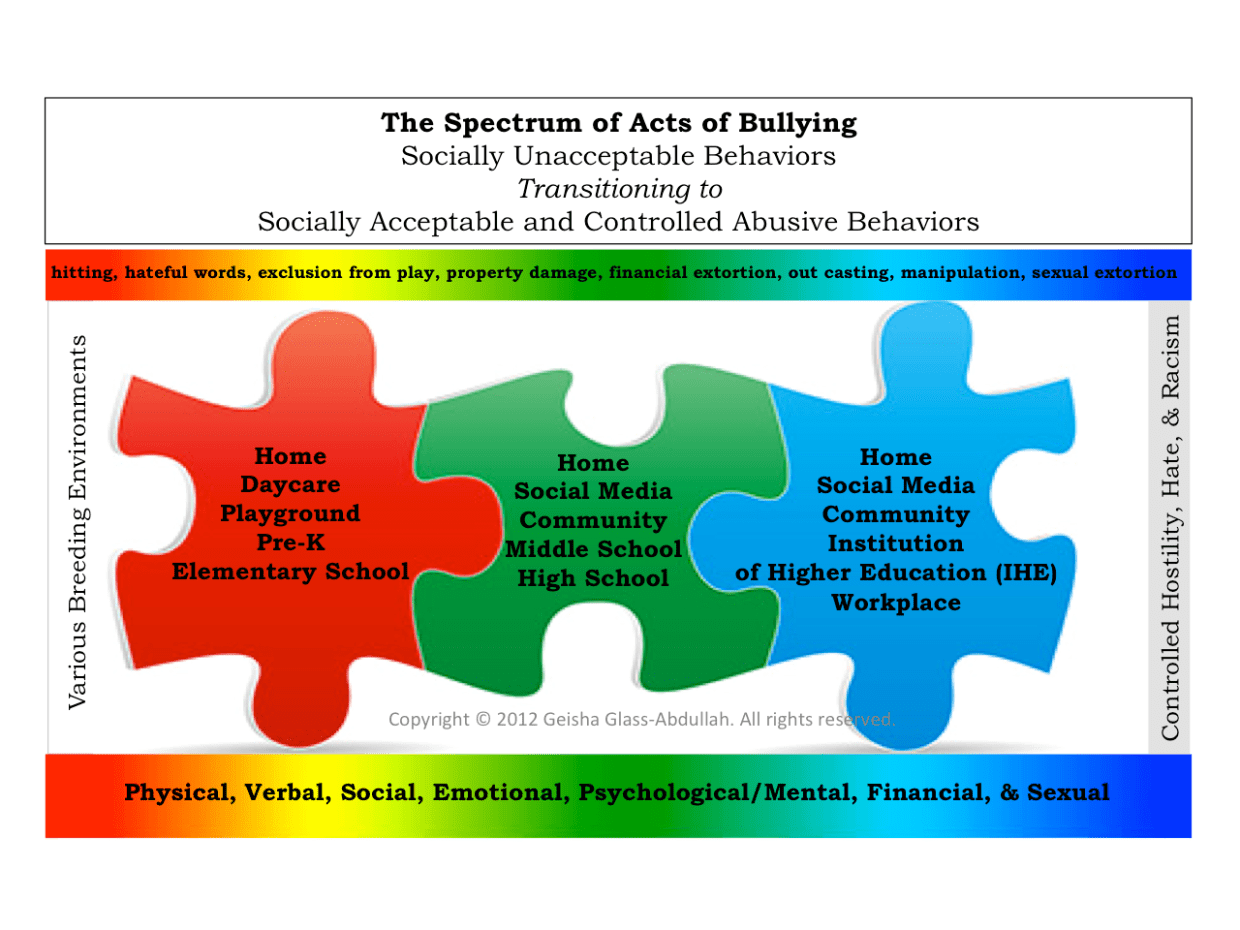
Redefine the Spectrum: Move beyond physical/verbal definitions. Teach students and staff about the Spectrum of Acts of Bullying, highlighting how repeated, intentional social exclusion is just as harmful as a physical blow.
Focus on Restorative Practices: Rather than just suspending a student, use restorative circles to address the harm caused. This forces the “resourceful” bully to face the human impact of their “socially acceptable” actions.
Active Supervision: Increase adult presence in “gray zones”—the cafeteria, locker rooms, and digital spaces—where social manipulation is most likely to occur.
Empower the “Silent Majority”: Give bystanders the language to call out subtle exclusion. When the social group no longer finds manipulative behavior “acceptable,” the behavior loses its power.
To address socially acceptable bullying, Dr. Geisha Glass-Abdullah emphasizes shifting from traditional punishment to a culture of “invitation” through her I-CORT Framework (Intentionality, Care, Optimism, Respect, and Trust). [1, 2]
1. Improve School Culture
A positive school culture is the primary defense against subtle, strategic bullying. [2, 3]
Implement I-CORT: Infuse Intentionality, Care, Optimism, Respect, and Trust into daily interactions to ensure all students feel recognized as “able, valuable, and responsible”.
Build Communities, Not Just Classes: Use team-building and “buddy” systems to shrink the “fertile ground” where bullying thrives. Students are less likely to target those they perceive as part of their own community.
Celebrate Collective Success: Shift away from individual hierarchies by celebrating class-wide achievements and encouraging students to understand others’ perspectives. [2, 4, 5, 6, 7]
2. Train Staff and Teachers
Training must bridge the “definition gap” between adults and youth regarding what constitutes bullying. [8, 9]
Identify Subtle Harm: Train staff to recognize “relational bullying” and the strategic, resourceful tactics used in the final stages of the Spectrum of Acts of Bullying.
Reflective Practice: Move beyond unilateral rules. Teachers should use facilitated discussions to gain student insights naturally rather than imposing opinions, which has been shown to lower bullying rates more effectively.
Utilize Workshop Resources: Programs like the Youth Empowerment Support (YES) Program offer free workshops specifically designed for educators to recognize and respond to these behaviors. [3, 10, 11, 12, 13, 14]
3. Address Specific Bullies
For students using “socially acceptable” bullying, traditional discipline often fails because they haven’t technically “broken” a major rule. [11]
Understand Motivation: Address the underlying pain or lack of social skills driving the behavior. Some bullies may come from high-conflict environments and require professional intervention to break their own “downward spiral”.
Reintegrative Shaming: Focus on the harm caused rather than just the rule broken. Use restorative practices to help the aggressor feel remorse and build empathy without being permanently cast out.
Scaffolding: Provide intensive, “indicated” supports that include the youth’s family to address behavioral health concerns early. [15, 16, 17, 18]
4. Support Victims
Victims of subtle bullying often feel they have no protection because their “injuries” are psychological or social rather than physical. [8, 11]
Social Architecture: Provide “scaffolding” through teachers and peers to help victimized children gain confidence and develop new, healthy friendships.
Holistic Well-being: Prioritize emotional and physical health. A nurturing environment reduces the stress that might otherwise lead victims to unhealthy coping mechanisms.
Validation: Ensure adults listen and check in often, letting the victim know the behavior is unacceptable even if it’s “socially acceptable” to others. [2, 3, 19, 20]
5. Empower Student Bystanders
Bystanders decide whether the social dynamics of a school remain benign or become adversarial. [21]
For example, the STAC Strategies (Midgett, n.d.):
Stealing the Show: Use humor or distraction to pull attention away from a bullying incident.
Turning it Over: Report the incident to a “safe adult”.
Accompanying Others: Approach the target afterward to show they are not alone.
Coaching Compassion: Gently confront the bully about how their behavior might feel to others.
Overcome Moral Distress: Address the fear and “moral conflict” that keep bystanders silent by building an environment of psychological safety—a shared belief that one can take risks (like speaking up) without fear of punishment or humiliation. [22, 23].
Conclusion
Socially acceptable bullying thrives in the shadows of technicalities. By leaning into the I-CORT principles and fostering a climate of radical inclusion, we can ensure that our schools are truly safe spaces for every student to learn and grow. Together we can decrease bullying by creating safe and inclusive schools for all. Make sure you visit the Youth Empowerment Support (YES) Program website to learn more about YES and all upcoming bully prevention workshops and events.
The transient nature of military life presents unique challenges for children and families, particularly in navigating frequent school transitions.1 These moves can disrupt academic progress, social relationships, and a child’s sense of belonging, all of which are critical for well-being. Concurrently, a robust body of literature highlights the disproportionate impact of bullying on African American youth, which is often compounded by systemic factors and racial bias within educational institutions.2 This paper synthesizes scholarly literature to explore the intersection of these two critical issues, with a specific focus on Dr. Geisha Glass-Abdullah’s 2022 correlational study on military family mobility and Invitational Education (IE) qualities of schools. We will examine how the principles of IE, particularly the I-CORT framework, can serve as a powerful tool to foster a positive school climate that mitigates the negative effects of mobility and addresses the specific challenges of bullying for African American children, youth, and teens.
Correlational Study of Military Family Mobility and Invitational Education Qualities of Schools
Glass-Abdullah’s (2022) correlational study of Military Family Mobility and Invitational Education Qualities of Schools,” sought to quantitatively examine if family mobility predicted military parents’ perceptions of the five Invitational Education qualities in public schools. Military families typically experience a permanent change of station every three years, forcing their children to enroll in new schools repeatedly.3 This study was prompted by a recognized lack of current data and literature concerning the experiences of these highly mobile families.
Using a non-probability sampling method and a survey distributed via social media, the study analyzed responses from 52 participants. The results of the analysis, which utilized multiple regressions, indicated no statistically significant relationship between family mobility and parents’ perceptions of the IE qualities of public schools. Despite this finding, the study revealed that the participants held a favorable perception of the IE qualities of U.S. public schools, independent of the mobility variable. This suggests that while mobility itself may not directly predict perceived school climate, the presence of positive, inviting qualities is a distinct and valued experience for military families.
Scholarly Literature on Bullying and African American Youth
Scholarly literature, including a review by Albdour and Krouse (2014), has found that African American adolescents have a higher prevalence of bullying and victimization compared to other populations.4 Bullying among African American youth is often rooted in complex factors, including intra-racial bullying and the insidious effects of systemic racism. Bully can manifest in various ways that directly impact the physical health of African American youth and teens (Glass-Abdullah, 2025).
A review of research on school bullying among African American youth, from an ecological systems analysis, highlights how societal and cultural factors, such as negative stereotypes and peer influence, can increase bullying behavior. Researchers have found that African American youth who are perceived as troublemakers by teachers may resort to stereotypical behaviors to gain respect, which can lead to bullying. This is further exacerbated by the fact that implicit bias among educators can lead to more frequent and harsher disciplinary actions against African American students, creating an “uninviting experience” that contributes to their marginalization.5
I-CORT: Invitational Education and the Improvement of Educational Settings
Invitational Education (IE), as a theory and practice, is founded on the belief that every individual is valuable and capable. The principles are applied through the I-CORT framework, which stands for Intentional – Caring, Optimistic, Respectful, and Trusting (Glass-Abdullah, 2022). This approach can profoundly benefit the educational settings of African American children, youth, and teens, particularly in addressing the challenges of bullying and systemic inequities.
In Invitational Education Theory, developed by William Purkey and John Novak, the term intentionality refers to the conscious and purposeful effort to create a welcoming and encouraging environment. It is one of the five core elements of the theory, alongside Care, Optimism, Respect, and Trust (I-CORT).
Intentionality is the deliberate act of designing and implementing people, places, policies, programs, and processes to foster human potential. An invitation, in this context, is defined as an “intentional act designed to offer something beneficial for consideration.” The theory distinguishes between four levels of functioning, with intentionality as a key differentiator:
Intentionally Inviting: A deliberate and consistent effort to make people feel welcome and valued. This is the highest level of functioning.
Unintentionally Inviting: Actions that are positive and welcoming but lack conscious thought or consistency.
Unintentionally Disinviting: Well-intentioned actions that, due to a lack of awareness, accidentally discourage or demean others.
Intentionally Disinviting: The purposeful and deliberate act of being unwelcoming, disrespectful, or harmful. This is the most toxic level.
Essentially, intentionality is what moves a school or organization from simply being a pleasant place to a place that actively and consistently promotes the growth and development of every individual within it. It is the “Intentional” application of the theory’s principles to ensure that every aspect of the environment sends a clear message that all individuals are able, valuable, and responsible.
Caring: Invitational Education emphasizes building intentionally caring relationships between all members of the school community—students, teachers, and staff. For African American children who may experience racial bias or a lack of cultural understanding, a caring environment signals that they are seen and valued. This can counteract the emotional distress and isolation caused by bullying and discrimination, fostering a sense of psychological safety that is crucial for learning.
Optimistic: An optimistic school environment conveys a belief in the potential of every student. This is particularly vital for African American children and teens who are often subjected to lower academic expectations and disproportionately harsh discipline. By creating an atmosphere of high expectations and support, an IE approach can combat the self-fulfilling prophecy of underachievement and empower students to reach their full potential.
Respectful: A respectful educational setting honors the unique cultural backgrounds, experiences, and identities of every student. This aligns with the concept of culturally responsive teaching, which uses a student’s cultural knowledge and life experiences to make learning more relevant and effective. This approach directly challenges the anti-Black biases that can lead to bullying and marginalization, creating a more inclusive and equitable classroom for African American youth.
Trusting: Trust is the foundation of a healthy school climate. For African American children and their families, a trusting relationship with the school can be difficult to establish due to historical and ongoing inequities. An IE approach works to build this trust by engaging parents as equal partners, ensuring transparent and fair disciplinary practices, and creating a safe space for open communication. This reduces the risk of students turning inward or engaging in unhealthy coping mechanisms when faced with bullying.
By intentionally implementing the I-CORT framework, as championed by Dr. Glass-Abdullah, schools and daycare programs can create an environment that not only lessens the negative impacts of mobility but also directly confronts the systemic issues that contribute to bullying among African American youth. This holistic approach focuses on the well-being of the whole child, building a foundation of resilience and empowerment that extends far beyond the classroom.
Conclusion
While Glass-Abdullah’s correlational study did not find a direct link between family mobility and perceived Invitational Education qualities, her research underscores the importance of intentional efforts to create a positive school climate. When combined with scholarly research on bullying and its impact on African American youth, a clear picture emerges: a trusting and inclusive school environment is not merely a “nice to have,” but a critical component of academic and emotional success. The application of the I-CORT framework offers a tangible path for educators to build a culture of care, combat systemic inequities, and create educational settings where all children, particularly African American children, can feel invited to learn, grow, and thrive (Glass-Abdullah, 2025). Future research should explore the specific long-term benefits of Invitational Education in mitigating the psychological effects of bullying and fostering a more equitable and supportive learning environment for all students.
References
Albdour, M., & Krouse, H. J. (2014). Bullying and victimization among African American adolescents: A literature review. Journal of Child and Adolescent Psychiatric Nursing, 27(2), 68–82. https://doi.org/10.1111/jcap.12066
Glass-Abdullah, G. (2022). Correlational study of military family mobility and invitational education qualities of schools[Doctoral dissertation, Capella University]. ProQuest Dissertations Publishing.
Post by Dr. Geisha Glass-Abdullah, Children and Youth Education Center (CYEC)
Childhood obesity is a burgeoning crisis with far-reaching health consequences. While often discussed in terms of diet and exercise, a less visible but equally potent factor contributing to this epidemic is bullying. For African American children, the layers of this issue can be particularly complex, intertwined with experiences of marginalization that exacerbate the impact of bullying. This blog will explore the profound link between bullying and childhood obesity, drawing on insights from scholarly literature by African American doctors. We will then examine how the principles of Invitational Education, championed by William Purkey, Dr. Geisha Glass-Abdullah, and others, offer a powerful framework to transform school climates, reducing bullying and, in turn, potentially mitigating the rise of childhood obesity.
The Heavy Burden: Bullying’s Link to Childhood Obesity
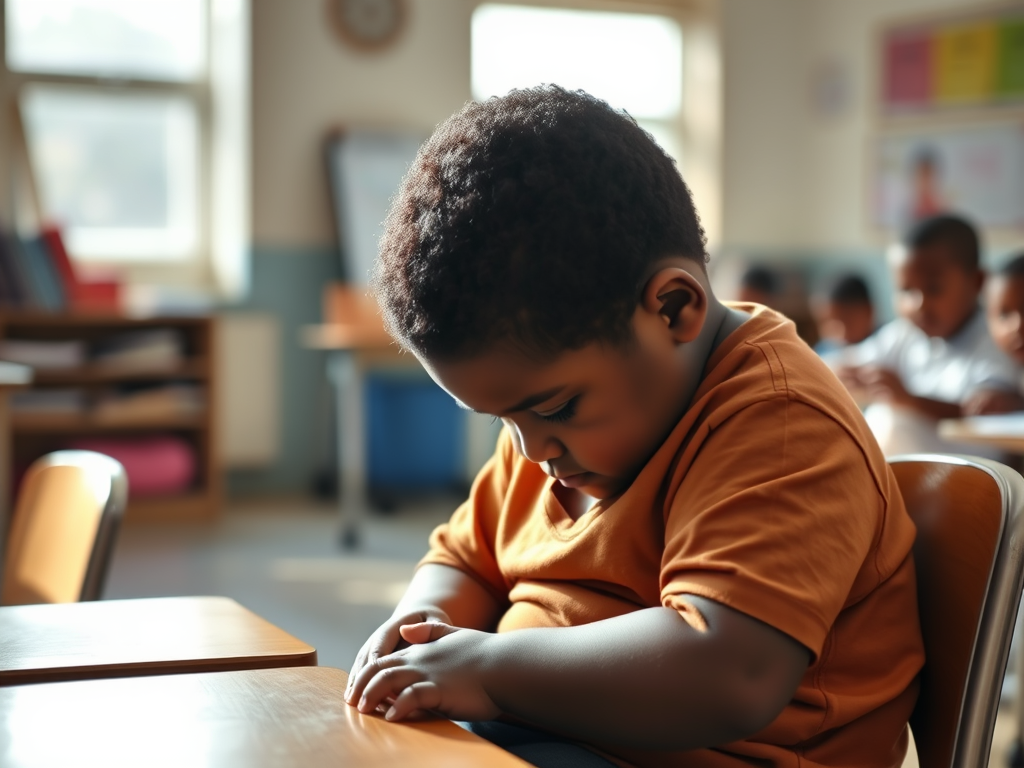
The connection between bullying and childhood obesity is a vicious cycle. Children who are bullied, especially about their weight or appearance, often experience intense psychological distress. This stress can manifest in various ways that directly impact their physical health.
Dr. Gail Wyatt, a distinguished African American psychologist and professor at UCLA, has extensively researched the impact of stress and trauma on health outcomes, particularly within minority communities. Her work, while not exclusively focused on childhood obesity, provides a critical lens through which to understand how chronic stress—a hallmark of bullying—can disrupt physiological processes. When a child is consistently exposed to bullying, their body is in a constant state of “fight or flight.” This triggers the release of cortisol, a stress hormone known to increase appetite, particularly for high-calorie, comfort foods, and promote fat storage, especially around the abdomen.
Furthermore, the emotional toll of bullying can lead to a sedentary lifestyle. As Dr. Valerie Earnshaw, a researcher focused on stigma and health disparities, has highlighted, experiences of discrimination and marginalization can lead to withdrawal from social activities. Children who are bullied may avoid physical education classes, sports, or even playing outside with friends for fear of further ridicule or harassment. This reduction in physical activity, coupled with stress-induced eating, creates a perfect storm for weight gain.
For African American children, the weight-related bullying they experience can be compounded by existing societal biases and racial discrimination. This “double burden” of stigma can intensify feelings of shame, anxiety, and depression, making them even more vulnerable to unhealthy coping mechanisms like overeating. The long-term health consequences are stark, with an increased risk of type 2 diabetes, heart disease, and other chronic conditions impacting quality of life well into adulthood.
Invitational Education: Cultivating a Culture of CARE
So, how can we disrupt this devastating cycle? This is where William Purkey’s Invitational Education (IE) offers a transformative approach. Invitational Education is a theory and practice that focuses on intentionally creating environments that are Caring, Optimistic, Respectful, and Trusting (I-CORT) (Glass-Abdullah, 2022). It shifts the focus from what’s “wrong” with students to what’s “right” with them, emphasizing their inherent worth and capabilities.
Imagine a school where every student feels genuinely invited to learn, grow, and belong. This is the essence of Invitational Education, and its impact on bullying and, subsequently, childhood obesity, can be profound:
Reduces Bullying through Empathy and Respect: By intentionally fostering environments where all individuals feel valued and respected, Invitational Education directly counteracts the root causes of bullying. When students and staff are taught to genuinely care for one another and trust is built, the fertile ground for bullying shrinks. Children are less likely to target peers they perceive as part of their “community” and more likely to intervene when bullying occurs.
Enhances School Climate and Engagement: A positive school climate, characterized by I-CORT principles (Glass-Abdullah, 2022), makes students feel safer and more comfortable. This increased sense of security encourages participation in all aspects of school life, including physical activities. When children feel accepted and supported, their stress levels decrease, making them less likely to turn to unhealthy eating as a coping mechanism.
Promotes Holistic Well-being: Invitational Education recognizes that academic success is intertwined with emotional and physical well-being. By prioritizing a nurturing and encouraging environment, schools can support students in developing healthy self-esteem and positive body images. This holistic approach empowers children to make healthier lifestyle choices, not out of shame or fear, but out of a genuine desire for self-care.
Empowers All Stakeholders: Invitational Education is not just for students; it extends to teachers, administrators, and parents. By inviting everyone to contribute to a positive school culture, it creates a collective responsibility for well-being. Educators who feel respected and optimistic are better equipped to identify and address bullying, while parents who feel trusted are more likely to partner with the school in supporting their children.
A Call to Action: Healing Through Connection
The impact of bullying on childhood obesity, particularly within vulnerable communities, is a silent crisis that demands our attention. By drawing on the wisdom of African American scholars who understand the nuances of stress and health disparities, we gain a clearer picture of the problem. And by embracing the principles of Invitational Education, we find a powerful pathway to healing.
Creating schools where every child feels seen, valued, and safe is not just about preventing bullying; it’s about nurturing an environment where all children can flourish physically, emotionally, and academically. It’s about empowering them to choose health, not out of a reaction to pain, but out of a foundation of self-worth and belonging. By investing in Invitational Education and the framework of I-CORT in educational settings, we invest in a healthier, more compassionate future for all our children.




 Children & Youth Education Centers